
History of San Siro Stadium: A Legendary Football Journey
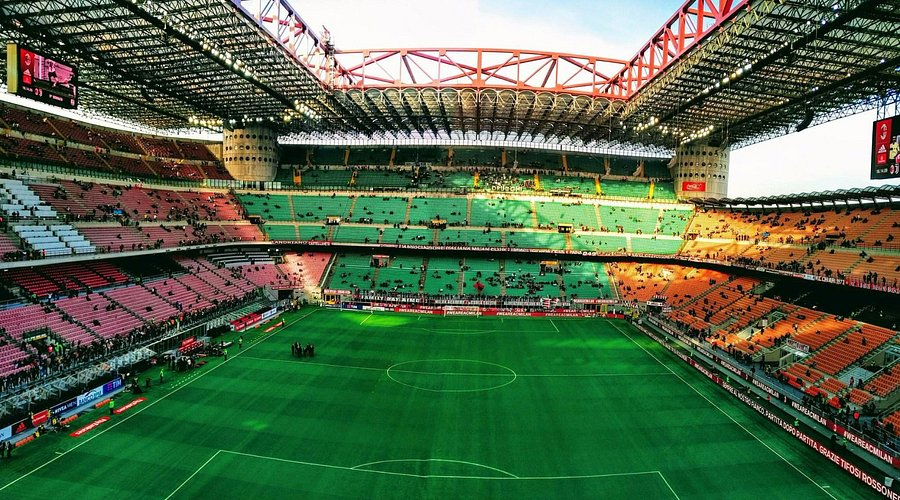
The following is a summary of information from Xoilac TV https://www.barpleiades.com/ about History of San Siro Stadium. This iconic venue, located in the heart of Milan, Italy, has served as a legendary stage for football’s greatest moments. From its 1926 opening to hosting major European finals, the stadium’s evolution reflects the growth of the sport. Join us as we explore the rich heritage of this historic ground.
History of San Siro Stadium: A Legendary Football Journey
The Architectural Genesis and Early Development
The story of this legendary venue began in 1925 when Piero Pirelli, the then-president of AC Milan, envisioned a dedicated football stadium that lacked the traditional athletics tracks common in Italy at the time. This vision laid the foundation for the History of San Siro Stadium as a “pure” football arena. Construction was completed in just over a year, and the stadium officially opened on September 19, 1926. The inaugural match was a classic derby between AC Milan and Inter Milan, setting the stage for a century of intense rivalry.
Initially, the stadium was the sole property of AC Milan. It featured four separate stands and could accommodate approximately 35,000 spectators. The design was revolutionary for its time, focusing on providing fans with a close-up view of the action. This intimacy became a hallmark of the venue, contributing to the intimidating atmosphere that visiting teams would fear for decades to come. Understanding the History of San Siro Stadium allows fans to appreciate how this specific design philosophy influenced stadium construction across Europe.
The Expansion and Shared Ownership
In 1947, a significant shift occurred in the History of San Siro Stadium when Inter Milan became co-tenants. Prior to this, Inter had played their home games at the Arena Civica. The shared arrangement necessitated further expansions to accommodate the growing fan bases of both clubs. By the mid-1950s, the stadium underwent a massive transformation, adding a second tier that dramatically increased the capacity to over 60,000.
This era also saw the introduction of the iconic spiral ramps that allow fans to access the upper tiers. These ramps became an architectural signature of the stadium, blending functionality with a unique aesthetic. The municipality of Milan eventually took ownership of the site, ensuring that both the Rossoneri and the Nerazzurri had a permanent, world-class home to showcase their talents on both domestic and continental stages.
Read more on Xoilac TV https://www.barpleiades.com/lich-thi-dau/
The 1990 World Cup and Modern Landmarks
Perhaps the most visually striking chapter in the History of San Siro Stadium occurred in preparation for the 1990 FIFA World Cup. To meet modern standards, the stadium underwent a comprehensive renovation that added the famous third tier and the eleven cylindrical towers that support the massive roof structure. These towers, constructed from reinforced concrete, became an instant landmark in the Milanese skyline.
Renovating for a Global Audience
The 1990 upgrades were not just about capacity; they were about prestige. The addition of the roof ensured that all spectators were protected from the elements, while the new lighting systems and hospitality areas turned the San Siro into a truly modern entertainment hub. During this tournament, the stadium hosted the opening ceremony and several high-profile matches, including the shocking victory of Cameroon over Argentina, further cementing its place in global sporting lore.
A Tribute to Giuseppe Meazza
In 1980, the stadium was officially renamed the Stadio Giuseppe Meazza in honor of the legendary player who starred for both Milan clubs and led Italy to two World Cup titles. While many fans still colloquially refer to it as the San Siro, the official name reflects the deep respect for the individuals who have graced its turf. This naming ceremony added a layer of historical sentimentality to the History of San Siro Stadium, bridging the gap between different eras of Italian football excellence.
Significant Matches in the History of San Siro Stadium
Often referred to as the “Scala del Calcio” (The Stairway to Football), the stadium has hosted multiple European Cup and Champions League finals. The atmosphere generated within its steep stands is often described by players as “electrifying” and “suffocating” for opponents. The History of San Siro Stadium is written in the sweat and glory of legends like Paolo Maldini, Javier Zanetti, and Marco van Basten.
As modern football moves toward high-tech, multi-purpose arenas, there is ongoing debate about the future of this aging giant. However, its cultural impact remains undisputed. For many, the stadium is a living museum, where every seat tells a story of a last-minute goal or a defensive masterclass. Looking back at the History of San Siro Stadium, it is clear that few venues can match its aura.
Conclusion
Reflecting on the History of San Siro Stadium reveals a narrative of triumphs, heartbreaks, and architectural grandeur. As Milan looks toward the future, the legacy of this “Scala del Calcio” remains untouchable in the hearts of football purists worldwide. Whether it eventually makes way for a new modern arena or continues to stand as a monument to the past, Stadium will always be the golden standard for footballing atmosphere.